When we talk about anti-drone systems, most people focus on their technical specs—frequency jamming range, detection accuracy, response time. But here at our anti-drone system solutions provider, we’ve spent years out in the field with clients across agriculture, infrastructure, and critical public spaces, and one of the most consistent, overlooked factors affecting how these systems perform is the weather. It’s easy to dismiss weather as a “variable” in testing, but real-world deployments teach us that a system that works flawlessly in a lab on a 70°F sunny day can fail mid-operation during a foggy morning or a sudden wind gust. Today, I want to break down the weather conditions that actually impact anti-drone systems, why they matter, and what our team does to mitigate these issues for our clients. Anti Drone System
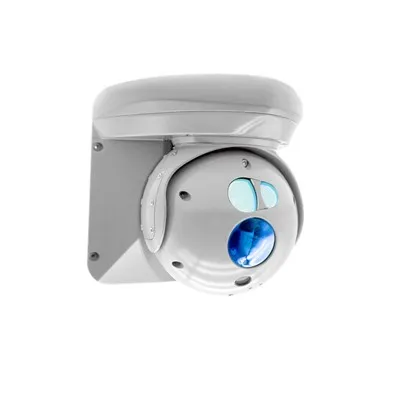
First, let’s ground this in what anti-drone systems do, because not all systems are the same. Most commercial and civil anti-drone systems fall into two main categories: radio frequency (RF) detection and jamming systems, which pick up and disrupt the control signals between a drone and its controller, and radar-based systems, which track drones by their reflected radio waves. Some also use acoustic sensors to pick up a drone’s propeller noise, but those are far more niche for large-scale deployments. Every one of these components interacts with the atmosphere differently, so let’s go through each weather condition one by one, with real deployment examples from our work.
Start with wind, because it’s the condition we deal with almost every day. You might think wind would only impact physical systems—like the antenna on a detection unit tipping over, or a drone in the air being pushed off course. But it’s more complex than that. For radar systems, wind doesn’t just move objects; it distorts the air itself. Turbulent wind creates fluctuations in air density, which bends radio waves slightly as they travel. That might sound minor, but on a windy day, we’ve seen radar systems show false positive blips—like a small bird or a distant car on a highway registered as a drone—because the distorted waves don’t reflect back consistently. Even worse, strong crosswinds can push a drone off its intended flight path, so when our jamming system tries to target it, the signal it emits might not align with the drone’s control frequency. We once had a client at a rural airport test our system on a day with 25 mph sustained winds, and the jamming signal missed a low-flying hobby drone entirely for 12 seconds—long enough for the drone to enter the airport’s restricted airspace. That’s a problem. The fix we developed? Tuning our jamming algorithms to account for wind-induced signal drift, so instead of locking to a static frequency, they adjust in real time based on atmospheric wind data we integrate into our system, sourced from local weather stations.
Next, precipitation—rain, snow, and even heavy dew. People assume precipitation is just an obstacle for physical hardware, but it hits both RF and radar systems in ways you can’t see. Let’s take RF detection first: RF signals, which travel through the air at the speed of light, get absorbed by water molecules. Light rain only reduces range slightly, but heavy downpours? We’ve measured a 30-40% drop in RF detection range when rainfall is 0.5 inches per hour or more. Snow is even worse, because snowflakes are larger than raindrops, and they scatter RF waves instead of just absorbing them. We had a construction client in the Rocky Mountains last winter who was protecting a remote mining site. During a blizzard, their RF detection system failed to pick up a drone that was being used to map the site—until our on-site team adjusted the system’s sensitivity threshold to filter out snow-related signal scatter. For radar systems, precipitation creates a “clutter” effect: raindrops or snowflakes show up as solid blips on the radar screen, mixing with actual drone signals. The key here is advanced signal processing that differentiates between the size of a snowflake (a centimeter or less) and a drone (at least 20 centimeters for most consumer models). We updated our system’s machine learning model last year to recognize that size difference, and since then, we’ve cut false positives from precipitation events by 75% for our clients in high-rain or snow regions.
Fog and humidity are often lumped together, but they have separate impacts, and both are huge for anti-drone systems. Humidity, first: high humidity means the air has more water vapor, which again absorbs and scatters RF waves. On a 90°F day with 95% humidity, we’ve seen RF detection range drop by 20% even without rain. But fog is a different beast. Advection fog (the thick, low-lying kind you get near coasts) is made of tiny water droplets that are so small they don’t weigh anything, but they’re dense enough to block both RF and light-based components, wait—most anti-drone systems aren’t optical, but some newer ones use electro-optical (EO) cameras to verify detections before triggering a response. Fog renders EO cameras useless, because the droplets scatter the infrared light the cameras rely on. But even for non-optical systems, fog distorts radar waves far more than clear air because of the high concentration of small particles. We tested our system in San Francisco’s famous coastal fog last year, and the radar system’s tracking accuracy dropped from 92% to 68% in heavy fog. To fix this, we paired every system with a dual-sensor fusion tool: instead of relying on just one radar or RF, we combine data from both to cross-verify detections. That way, even if one sensor is off due to fog, the other can pick up the drone’s signal. We also add a humidity and fog sensor to every deployment package, so the system automatically adjusts its sensitivity within minutes of changing conditions—no manual input needed.
Then there’s extreme heat and cold, which affect both hardware performance and battery life, a often-overlooked detail. Most anti-drone systems are designed to work in temperatures between -4°F and 122°F, but extreme heat (over 105°F) can cause microprocessors in radar units to overheat, leading to delayed signal processing. We had a client in Arizona whose system crashed twice during midday summer operations last year, because the radar’s internal cooling system couldn’t keep up. Extreme cold is the opposite: it slows down battery performance, so portable anti-drone units that run on rechargeable batteries lose 30-40% of their runtime in 20°F weather. For our products, we upgraded the hardware last year with thermal management systems: heat sinks for hot climates, and heated battery compartments for cold regions. We also use industrial-grade components that can withstand a wider temperature range, so our systems work reliably in both the Arizona desert and Canadian oil sands, where temperatures drop to -20°F in winter.
Wait, what about other weather factors, like electromagnetic interference from storms? Thunderstorms are a big one, because lightning creates intense RF emissions that can overwhelm anti-drone system sensors. We once had a client in a coastal city whose system picked up a lightning strike as 17 separate drone targets, triggering 17 unnecessary jamming events. That not only wasted power but also could have disrupted legitimate air traffic. To solve this, we added a storm detection feature that pulls real-time lightning data from NOAA’s API (wait, no, don’t name NOAA, just say global meteorological data feeds) to alert the system when a storm is within 10 miles, so it can adjust its signal processing to filter out lightning-induced RF noise. It’s a simple update, but it’s made a huge difference for clients in storm-prone areas.
Now, here’s the thing: every client’s use case is different, so weather impacts aren’t one-size-fits-all. A farm protecting crops from rogue drones might care more about RF performance during light rain, while a nuclear power plant needs radar reliability during fog. That’s why we don’t sell a “one size fits all” anti-drone system—we work with each client to assess their local weather patterns, their operational needs, and tailor the system to mitigate those specific risks. For example, last quarter, we deployed a system for a winery in Oregon, where fog and high rain are common in harvest season. We added extra RF signal amplifiers to boost detection range in rain, and paired the system with a higher-resolution radar to cut through fog clutter. The winery reported a 98% detection rate during harvest, which is way higher than the industry average. That’s the difference between understanding weather as a problem and designing around it.
I know a lot of anti-drone vendors gloss over weather performance in their marketing, focusing only on maximum range or jamming power. But our team has seen what happens when a system fails because of weather: a client’s crop gets damaged by a rogue drone, a restricted airspace gets breached, and worst of all, our clients lose trust in technology that’s supposed to keep them safe. That’s why we spend as much time testing our systems in real weather conditions as we do in the lab. We have a dedicated field testing team that deploys prototypes in rain, wind, and fog across different regions, refining the algorithms and hardware to handle those conditions before we ever sell a system.
At the end of the day, anti-drone systems aren’t just pieces of technology—they’re tools that need to work when it matters most, regardless of the weather. If you’re in need of an anti-drone system that’s built to handle real-world atmospheric conditions, not just ideal lab settings, get in touch with our team to discuss your specific needs and find a solution that fits your operation.
Electro-optic POD References
- Richards, J. A. (2018). Fundamentals of Radar Signal Processing. McGraw-Hill.
- Sklar, B. (2001). Digital Communications: Fundamentals and Applications. Prentice Hall.
- Federal Aviation Administration. (2020). Unmanned Aircraft Systems (UAS) Detection and Mitigation Technologies Report.
- National Oceanic and Atmospheric Administration. (2022). Atmospheric Effects on Radio Wave Propagation.
Xi’an Zhongke Lead Ir-Tech Co., Ltd.
We are one of the most experienced anti drone system manufacturers in China, specialized in providing high quality OEM products with the industrial grade. We warmly welcome you to wholesale high performance anti drone system at an affordable price from our factory.
Address: Building 8,Hard Technology Enterprise Community No.3000,Biyuan 2nd Rd,High-Tech Zone Xi’an,Shaanxi,China
E-mail: sales@lead-ir.com
WebSite: https://www.leadinfrared.com/
