If you’ve ever walked into a processing plant on a cold Canadian winter morning, you’ve probably watched a line of workers run through their pre-start checks, double-checking every valve before turning on the flow. Early in my career as a brass flange ball valve supplier, I missed how much those workers relied on those small, unassuming valves—until a cold snap in Alberta ruined a customer’s batch of maple syrup. That day, I learned temperature isn’t just a number on a thermostat; it’s a silent driver that makes or breaks how a brass flange ball valve performs, and getting it wrong can cost you hundreds of thousands of dollars, not to mention a lot of lost sleep. Brass Flange Ball Valve
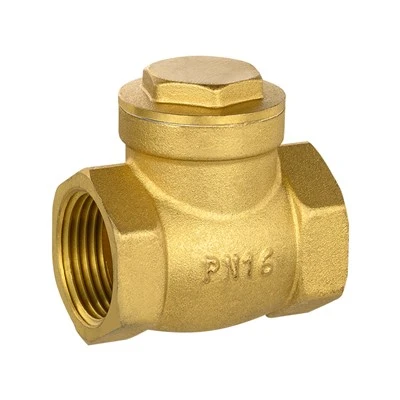
Brass is our workhorse for good reason: it’s machinable, corrosion-resistant for most common fluids, and strong enough to hold up to pressure without breaking the bank. But it’s a metal, and metals don’t behave the same way when the mercury shifts. As a supplier, I get questions all the time: “Will my valve work in a plant that dips to -40°F? What about in a chemical plant where process fluid hits 350°F?” The answer isn’t a simple yes or no. It’s about understanding how temperature changes every part of the valve, from the small ball inside to the bolts holding the flanges tight, and how those changes add up over time.
Let’s start with the basics: thermal expansion, the force that’s responsible for half the valve’s quirks, especially in extreme cold or heat. Every material expands when heated and contracts when cooled, and brass’s coefficient of thermal expansion is a specific number—roughly 19 micrometers per meter per degree Celsius, for context steel is around 11, so brass expands nearly twice as much. That might sound trivial, but let’s put it in real terms. Take a 12-inch brass flange ball valve: when it’s at 70°F, the flanges line up perfectly with the pipe, the ball spins freely, and the seals fit snugly. Crank that up to 300°F, and the brass expands so much that the valve body grows by about 0.01 inches—enough to warp the seal grooves, or even pull the bolts out of alignment if they’re sized for room temperature. In cold, say -20°F, the valve shrinks, so the seals that were snug at 70°F gap open, and the ball can get loose or even rattle, leading to leaks you wouldn’t see in mild conditions.
I saw this play out three years ago for a food and beverage customer in Wisconsin. They installed a batch of our 6-inch brass flange ball valves for a syrup processing line, planning to test the line at 180°F. The valves worked fine at room temperature, so they didn’t do a thermal test. When they fired up the syrup, the brass expanded so much that the Teflon seals they were using started to compress too tightly, overheating, melting, and leaving bits of Teflon in their product. They thought our brass was faulty, but when we ran a quick calculation, it turned out the Teflon’s coefficient of thermal expansion is way higher than brass’s—so when the brass body grew, the seal couldn’t keep up. The fix? We switched to a flexible graphite seal that moves with the brass, and they’ve had zero issues since. That’s the kind of small, temperature-focused detail we don’t skip, because we’re not just selling valves—we’re solving problems.
Next, strength. Brass’s tensile strength changes with temperature, and it’s not linear. At room temperature, our standard 360 brass valve has a tensile strength of around 58,000 PSI, which is more than enough for most fluid lines. Cool it down to -40°F, and it actually gets stronger—tough, malleable metals tend to get harder at subzero temps, and brass is no exception. The problem isn’t cold, it’s heat. Crank the temperature above 250°F, and brass starts to lose strength steadily. At 350°F, it’s down to about 45,000 PSI, and by 500°F, that drops to 30,000 PSI. That might sound like a high number, but if your line is under 150 PSI, that’s still fine—until you add in thermal expansion. If the valve body warps at 300°F, even a strong brass valve can’t hold a seal if the flanges are out of line. I always tell customers: if your process is over 250°F, you’ll want a higher-grade brass, like 855 brass, which is designed to hold strength at high temps, or even a bronze alloy, but brass is still our top pick for most applications, it just needs to be matched to the temperature.
Seals are the other big temperature weak spot, and this is where a lot of cheap suppliers cut corners. A valve’s seal is what stops fluid from leaking out, and seals are almost always made of polymers, rubber, or elastomers, none of which hold up to extreme temperatures. Let’s take EPDM, a common seal material: it works great between -40°F and 250°F. Cool it below -40°F, and it becomes brittle—so when the valve tries to close, the seal cracks, and you get a leak. Heat it above 250°F, and it starts to break down, hardening and losing its flexibility, so it can’t seal anymore. For customers dealing with temperatures outside that range, we use nitrile seals for higher heat, or fluorocarbon (Viton) seals for both extreme heat and chemical resistance. Last year, a mining customer came to us after their old valve seals failed in a slurry line that hit 300°F. Their old supplier had given them EPDM seals, which turned to mush after a month. We swapped in Viton seals, and those valves have been running for over a year with zero leaks. It’s not magic—it’s knowing what seal works for what temperature, and not just giving customers a one-size-fits-all part.
Another thing a lot of people don’t talk about is thermal shock. That’s when a valve is exposed to a sudden, extreme temperature change—like if a 70°F valve gets hit with 400°F steam all at once, or goes from room temp to -20°F in an hour. Brass has pretty good thermal conductivity, but it’s not perfect, and when one part of the valve heats or cools faster than another, it expands or contracts at different rates, causing stress. That stress can lead to cracks in the valve body over time, or even breakage if the shock is severe. We learned this lesson the hard way a couple of years ago with a power generation customer. They were cycling their steam line every day—hot during the day, cold at night—and didn’t account for thermal shock in their valve selection. A few months in, a valve split down the side. We investigated, and the issue was that the brass body was thin-walled, so it expanded and contracted much faster than the flanges, leading to metal fatigue. The fix? We switched to thicker-walled bodies, and added a small expansion gap in the flange bolts, which let the valve move slightly without stress. They’ve been cycling those valves for three years now, no issues. That’s the kind of testing we do in our shop every day, testing valves through temperature cycles to make sure they hold up, because we’d rather replace a valve in our warehouse than one in a customer’s plant.
Corrosion and temperature also go hand in hand, and it’s not just about high temps making fluids more corrosive. At low temperatures, if there’s any moisture in the line, it can freeze, and expanding ice can crack the valve body or damage seals. I had a customer in northern Minnesota who forgot to drain their valves over a long weekend in January, and the water inside froze, splitting the valve body clean in two. That’s not a brass flaw—it’s a human error, but it’s a temperature-related issue we see all the time, and it’s why we always include installation guidelines with every valve, including draining procedures for cold climates. For customers dealing with corrosive fluids at high temperatures, we also offer a passivated brass finish, which prevents oxidation at high temps, and a sealant that works with our flange bolts to stop any seepage that could lead to corrosion.
Let’s cut to what this means for you, as someone who needs a reliable valve. If you’re operating in a mild climate, with process temperatures between -20°F and 250°F, our standard 360 brass flanged valves with EPDM seals will work perfectly, no extra cost. If you’re hitting extremes—below -20°F, above 250°F, or dealing with thermal shock or corrosive fluids—we can adjust the alloy, the seal, or the body design to match. As a supplier, I don’t just sell you a valve that works in 70°F, I sell you a valve that works in your environment, whatever that is. I’ve seen what happens when you cut corners on temperature matching: lost product, downtime, thousands in repair bills. That’s why every valve we leave our shop has a temperature rating stamped on it, and our team will walk you through exactly what that means for your specific application.

At the end of the day, brass flange ball valves are simple in design, but they’re sensitive to temperature. Small changes in expansion, strength, or seal performance can turn a good valve into a bad one, and it’s our job as a supplier to know that, not just sell a generic valve. If you’re tired of valves that leak in cold weather, melt in heat, or fail mid-cycle, let’s talk. We can walk through your temperature ranges, your process, and find the right brass flange ball valve for your needs, no guesswork.
Brass Flange Ball Valve References
- Engineering ToolBox. (n.d.). Thermal Expansion of Metals. Retrieved from engineeringtoolbox.com
- ASME B16.34. (2021). Valves – Flanged, Threaded, and Welding End. American Society of Mechanical Engineers.
- Brandes, E. A. (1992). Smithells Metals Reference Book (7th ed.). Butterworth-Heinemann.
- Rubber and Plastics News. (2020). Seal Material Selection for Extreme Temperature Applications. Retrieved from rubberandplasticsnews.com
Yuhuan East-Asia Valve Industrial Co., Ltd.
As one of the most experienced brass flange ball valve manufacturers and suppliers in China, we also support customized service. We warmly welcome you to wholesale high quality brass flange ball valve for sale here from our factory. If you have any enquiry about quotation, please feel free to email us.
Address: Bingang Industrial Park,Shamen Town,Yuhuan City,Zhejiang Province.
E-mail: sales@dongyavalve.com
WebSite: https://www.eastasiavalves.com/
