If you’ve ever peered through a microscope to spot a cell dividing, adjusted a camera lens to capture a sunset’s last gold light, or used a pair of binoculars to watch a migrating hawk glide high above a treeline, you’ve relied on optical instruments—tools that turn invisible or faraway light into something tangible for the human eye. As someone who’s spent the last 12 years sourcing, testing, and supplying these instruments to labs, hospitals, and field researchers across North America, I’ve heard so many people ask a simple question: How do these things actually work? It’s not just about looking through a tube and seeing more, right? There’s a lot of precise, often unseen engineering that turns raw light into usable information, and I’ve seen that engineering make a difference in everything from cancer research to conservation work. Optical Instruments

Let’s start with the most common optical instrument most people encounter: the simple magnifying glass. If you held one up to a small print or a coin, you’d see it get bigger, and that’s all thanks to basic refraction—light bending as it moves from one transparent material to another. A magnifying glass is just a convex lens, meaning it’s thicker in the middle than at the edges. When parallel rays of light hit that curved glass, they don’t pass straight through; they bend inward, converging at a single point called the focal point. If you hold the glass just right—so the object you’re looking at sits slightly inside the focal point—the refracted light rays spread out to enter your eye. Your brain, trained to interpret light as straight lines, reconstructs those diverging rays into a larger, upright, virtual image. No digital screens, no sensors, just glass and light. But here’s the thing: as basic as this sounds, even a magnifying glass has to be crafted precisely. A lens that’s slightly uneven can cause distorted edges or blurry spots, which is why I only work with manufacturers that test every single lens for uniformity before it ever hits my inventory. A magnifier that’s off by a fraction of a millimeter might look fine at first, but it’ll give you a headache after 10 minutes of reading tiny text.
Moving up in complexity, and you get to a compound light microscope—the workhorse of schools, clinical labs, and life science research centers. This is the instrument I sell more of than any other, and the way it works is a two-step lens system, which is why it can magnify objects way beyond what a single magnifying glass can do. Let’s break it down. First, there’s the objective lens, positioned right above the sample you’re looking at. It has a very short focal length, so when light passes through the thin sample, it bends to create a real, inverted, and much larger image of the sample. That real image then acts as the object for a second lens, called the eyepiece (or ocular lens), which is what you look through. The eyepiece takes that already magnified image and enlarges it even more, creating the final virtual image your eye sees. But light microscopes don’t just rely on lenses—they need a light source too. Most modern compound microscopes use a built-in LED or halogen light that shines up through the sample (for transparent specimens, like stained tissue slices) or reflects off the surface (for solid samples, like mineral grains). The light has to be focused evenly, though, because uneven light will wash out details. I remember a customer from a small university lab calling me three years ago, frustrated because their old microscope had a flickering halogen bulb that was ruining their cell cultures. I sourced a new LED illuminator that fit their exact model, and later they sent me a photo of the first clear image of stem cell division they’d gotten in six months. That’s the part no one talks about: optical instruments aren’t just parts on a page—they’re tools that let people do their best work.
If you need to see things even smaller than what a light microscope can show, you move to an electron microscope. This is the kind of instrument that lets you spot individual atoms, which is way beyond the wavelength of visible light. Wait—let’s circle back to that wavelength part, because it’s the key to why some things work and others don’t. Visible light has a wavelength between about 400 and 700 nanometers, right? A bacterium is roughly 1,000 nanometers long, so a light microscope can just barely see it, but a virus is 50 to 100 nanometers—too small for visible light to resolve, because the wavelength is bigger than the object itself. Electron microscopes solve this by using beams of electrons instead of light, which have a much shorter wavelength—down to 0.004 nanometers. To control those electrons, instead of glass lenses, they use electromagnetic lenses: coils of wire that create a magnetic field to bend the electron beam, just like a glass lens bends light. The electrons bounce off or pass through the sample, and a detector turns that into an image on a screen. Electron microscopes are huge, expensive, and require a lot of training to use, so I only supply them to well-equipped research facilities. I once worked with a materials science lab that used an electron microscope to study the tiny cracks in wind turbine blades—cracks that, once identified, let engineers make blades that last 20 years instead of 10. That’s optical engineering at a level most people never see, but it’s critical for modern technology.
Now let’s look at optical instruments that look outward, not inward at small things. Telescopes, for example, have been around since the 1600s, and they revolutionized astronomy. Like microscopes, there are two main types: refracting telescopes and reflecting telescopes. Refracting telescopes use large convex objective lenses at the front to gather light from distant objects (like stars or planets). Because those objects are so far away, the light rays that hit the objective are almost perfectly parallel, so they converge at the focal point to create a small, inverted real image. An eyepiece lens then magnifies that image, so your eye can see it clearly. Reflecting telescopes, on the other hand, use a curved concave mirror instead of a glass objective lens. Why? Because building a large glass lens is really hard—glass can sag under its own weight, and it’s hard to get perfectly clear, distortion-free glass that big. A mirror, though, can be supported from behind, and mirrors can be made much larger. The mirror gathers the light and reflects it to a focal point, often with a smaller secondary mirror that directs the light to an eyepiece or a camera sensor. Most large observatory telescopes are reflecting for that exact reason. I supply a lot of portable refracting telescopes for amateur astronomers, too—they’re lighter, easier to set up for someone who’s just starting out, and way less expensive than a big observatory model. Last year, I had a group of 4-H kids order a dozen small telescopes to use for a constellation project, and a few months later their leader sent me a photo of them looking at the rings of Saturn through the finished units. That’s the magic of these tools, right? They make the universe feel a little closer.
Another optical instrument that’s become ubiquitous in the last 20 years is the digital camera, whether it’s in your smartphone or a professional DSLR. At their core, cameras use the same refraction as magnifiers and telescopes: a convex lens (or multiple lenses, to correct for distortion) gathers light and focuses it to a point. Instead of your eye, though, they have a sensor—tiny, light-sensitive pixels that convert light into electrical signals, which get turned into the digital image you see. The lens system in a camera is way more complex than a simple magnifier, though. A cheap phone camera might have two or three lenses, but a professional camera lens can have 15 or more elements. Each element is shaped and positioned to fix flaws called aberrations. For example, chromatic aberration happens when different colors of light bend at slightly different angles, so you get a rainbow halo around high-contrast edges. The multiple lenses in a good camera lens are made of different types of glass, each calibrated to bend different wavelengths of light the right amount, so all colors converge at the same point. I work with a lot of wildlife photographers, who rely on high-quality camera lenses to capture clear images of animals from far away without spooking them. A lens that’s not corrected for chromatic aberration can turn a crisp photo of a wolf into something fuzzy with a purple halo around its fur, so precision matters here too.
Wait, a lot of people ask me about other optical instruments, too—like binoculars, or periscopes, or even things like laser levels. Let’s keep it simple with binoculars, since they’re just two small refracting telescopes mounted side by side. Early binoculars had the same problem as early refracting telescopes: inverted images. To fix that, they added two prisms inside the body of each tube. Prisms are triangular pieces of glass that reflect light, turning an inverted image right-side-up, and also folding the light path so the binoculars can be compact enough to hold in your hands, instead of being as long as a full-size telescope. That’s why binoculars are so portable—those prisms are small, but they change the entire shape of the light path. I once had a customer who used binoculars for birdwatching, and he told me he’d had a pair that didn’t have the right prism alignment, so all the birds he saw were upside down. That sounds like a silly problem, but when you’re standing in a marsh trying to identify a warbler, it’s not funny at all. Even small misalignments in prisms or lenses make a huge difference.
One thing I’ve learned after 12 years in this business is that most people don’t realize how delicate optical instruments are. They’re not just plastic and glass—each component is calibrated to within a fraction of a millimeter, and even dust or a tiny scratch on a lens can ruin performance. That’s why my team offers calibration and repair services, not just sales. I’ve had a client who used a medical microscope in a histology lab drop it during a move, cracking a lens. Instead of making them buy a new $8,000 microscope, we sourced a replacement lens, calibrated the entire unit, and saved them thousands of dollars. That’s the part of being an optical supplier that no one advertises, but it’s what keeps customers coming back.
I know this stuff can sound technical, but at the end of the day, every optical instrument is built for one purpose: to extend what humans can see. A magnifier lets you read a tiny recipe card. A microscope lets a doctor look for cancer cells in a blood sample. A telescope lets a kid see the craters on the moon. A camera lens lets a wildlife photographer capture a photo that protects endangered species. None of these things would work without the basic science of light and lenses, but they also need people who understand that science, and who care about making a tool that works reliably, every single time.
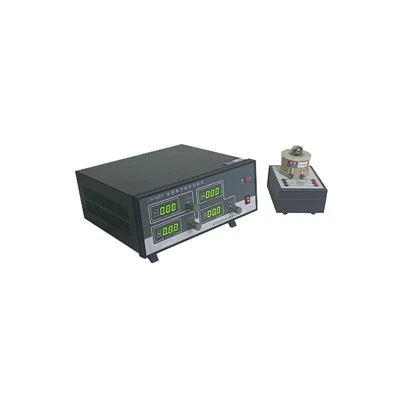
If you’re in the market for optical instruments—whether you’re equipping a school lab, a hospital, a research station, or just need equipment for a hobby—my team can help. We carry a full range of microscopes, telescopes, binoculars, camera lenses, and specialty instruments, and we can also customize or repair existing units to fit your exact needs. We work with customers large and small, from individual researchers to major universities, and we stand behind every instrument we sell. If you want to talk through what you need, ask questions about how something works, or get a quote, don’t hesitate to reach out to our team to start a conversation about your requirements.
Optical Instruments References
Hecht, E. (2017). Optics (5th edition). Pearson Education.
James, J. R. (1999). Optical Instrumentation for Experimenters. Cambridge University Press.
Lane, S. C. (2020). Electron Microscopy: Principles and Applications for Biologists. Wiley-Blackwell.
Nanjing Longbow Scientific&Educational Instrument Co., Ltd.
As one of the most professional optical instruments manufacturers and suppliers in China, we’re featured by quality products and good service. Please rest assured to buy customized optical instruments from our factory. If you have any enquiry about pricelist, please feel free to email us.
Address: Room D, 22th floor, No.305, North Jiangdong Road, Nanjing,Jiangsu Province, China
E-mail: 79425380@qq.com
WebSite: https://www.lb-physics.com/
