As a supplier of 2.4G dimmable LED drivers, I often encounter various inquiries from customers. One question that frequently comes up is whether a 2.4G dimmable LED driver can be used in a low – temperature environment. This is a crucial concern, especially for applications in cold storage facilities, outdoor winter lighting, and in regions with extremely cold climates. In this blog, I will delve into the technical aspects, potential challenges, and solutions related to using 2.4G dimmable LED drivers in low – temperature settings. 2.4G Dimmable LED Driver
Technical Characteristics of 2.4G Dimmable LED Drivers
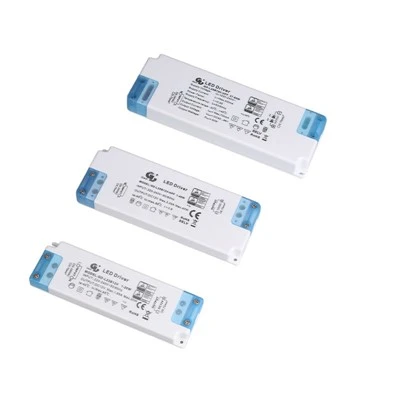
Before discussing the performance in low – temperature environments, it’s essential to understand the basic working principles of 2.4G dimmable LED drivers. A 2.4G dimmable LED driver is a device that controls the power supply to an LED light. The "2.4G" refers to the 2.4 GHz wireless frequency used for communication. This allows for wireless dimming and control, providing flexibility in lighting management.
The core components of a 2.4G dimmable LED driver include a power conversion circuit, a control circuit, and a wireless communication module. The power conversion circuit converts the input voltage (usually from the mains) into a suitable voltage and current for the LED. The control circuit communicates with the wireless module, enabling functions such as dimming, color temperature adjustment, and on/off control based on user commands received via the 2.4 GHz frequency.
Effects of Low Temperatures on Electronic Components
Low temperatures can have significant impacts on the performance of electronic components, and a 2.4G dimmable LED driver is no exception.
Battery Performance
If the 2.4G communication module in the driver is powered by a battery, low temperatures can severely reduce the battery’s capacity and output voltage. Batteries operate based on chemical reactions, and cold temperatures slow down these reactions. As a result, the battery may discharge more quickly, and its ability to provide a stable voltage to the wireless module may be compromised. This can lead to intermittent communication between the driver and the control device, causing flickering or loss of control over the LED lights.
Capacitor Behavior
Capacitors are essential components in the power conversion circuit of the LED driver. At low temperatures, the capacitance of some types of capacitors can decrease. This affects the filtering and energy storage functions of the circuit. For example, electrolytic capacitors are particularly sensitive to low temperatures. A decrease in capacitance can lead to increased ripple voltage in the output, which may cause the LED lights to flicker or have uneven brightness.
Semiconductor Devices
Transistors and integrated circuits (ICs) in the control and power conversion circuits are also affected by low temperatures. The mobility of charge carriers in semiconductor materials changes with temperature. At low temperatures, the switching speed of transistors may slow down, and the performance of ICs may degrade. This can result in reduced efficiency of the driver and potential malfunctions in the control algorithms, such as inaccurate dimming levels or unresponsive control commands.
Wireless Communication
The 2.4 GHz wireless communication module may experience reduced signal strength and increased interference in low – temperature environments. Cold air can have different dielectric properties compared to warm air, which can affect the propagation of radio waves. Additionally, the internal components of the wireless module, such as the antenna and the radio frequency (RF) transceiver, may be less efficient at low temperatures, leading to unstable communication between the driver and the control device.
Testing and Certification in Low – Temperature Conditions
To ensure the reliability of 2.4G dimmable LED drivers in low – temperature environments, rigorous testing is necessary. Our company conducts extensive low – temperature testing on our products. We simulate low – temperature conditions in a climate – controlled chamber, gradually reducing the temperature to the expected operating range.
During the test, we monitor various parameters of the driver, including input and output voltage, current, power consumption, dimming accuracy, and wireless communication stability. We check for any signs of malfunction, such as flickering of the connected LED lights, unresponsive control commands, or abnormal power consumption.
In addition to in – house testing, we also strive to obtain relevant certifications for our products. Certifications such as the IP (Ingress Protection) rating and the UL (Underwriters Laboratories) certification under low – temperature conditions give customers confidence in the performance of our 2.4G dimmable LED drivers in harsh environments.
Solutions for Using 2.4G Dimmable LED Drivers in Low – Temperature Environments
Component Selection
One of the most effective ways to improve the low – temperature performance of 2.4G dimmable LED drivers is through careful component selection. For batteries, we choose models that are specifically designed for low – temperature operation. These batteries have a higher energy density at low temperatures and can maintain a more stable output voltage.
When it comes to capacitors, we opt for types that are less sensitive to temperature variations, such as ceramic capacitors. Ceramic capacitors have a relatively stable capacitance over a wide temperature range, which helps to ensure the stability of the power conversion circuit.
For semiconductor devices, we select transistors and ICs that are qualified for low – temperature operation. These components are designed to operate efficiently even at extremely cold temperatures, with minimal changes in performance.
Thermal Management
Implementing proper thermal management is also crucial. We can design the driver with additional heat – generating components, such as small resistors, to maintain a minimum operating temperature. This can be controlled by a temperature – sensitive switch, which activates the heat – generating components when the temperature drops below a certain threshold.
In addition, thermal insulation materials can be used to reduce heat loss from the driver. For outdoor applications, enclosures with good insulation properties can be used to protect the driver from the cold environment.
System Design Optimization
The overall system design of the LED driver can be optimized for low – temperature use. For example, the control algorithms can be adjusted to compensate for the reduced performance of components at low temperatures. The dimming curves can be recalibrated to ensure accurate dimming levels, even when the driver’s response time is affected by the cold.
Real – World Applications and Success Stories
Our 2.4G dimmable LED drivers have been successfully used in various low – temperature applications. In cold storage facilities, where the temperature can be as low as – 20°C to – 30°C, our drivers have provided reliable lighting control. The wireless dimming feature allows the facility managers to adjust the lighting levels according to the storage requirements, saving energy while maintaining adequate illumination.
In outdoor winter lighting projects, such as streetlights in cold regions, our drivers have withstood harsh weather conditions. The stable wireless communication ensures that the lights can be easily controlled, even when it’s snowing or extremely cold.
Conclusion
In conclusion, while 2.4G dimmable LED drivers face certain challenges in low – temperature environments, with proper design, component selection, and testing, they can be effectively used in such settings. Our company is committed to providing high – quality 2.4G dimmable LED drivers that can perform reliably in cold temperatures.
Low Voltage Cabinet Lights If you are in need of 2.4G dimmable LED drivers for low – temperature applications, I encourage you to reach out to us for further discussions. We can provide customized solutions based on your specific requirements and ensure that you get the most suitable drivers for your project.
References
- Horowitz, P., & Hill, W. (1989). The Art of Electronics. Cambridge University Press.
- Schilling, D. L., & Belove, C. (1979). Electronic Circuits. McGraw – Hill.
- White, D. J., & Woodson, H. H. (1958). Electromechanical Energy Conversion. Wiley.
Foshan Gedi Electrnoic Co., Ltd.
As one of the most professional 2.4g dimmable LED driver manufacturers in China, we’re featured by quality products and good price. Please rest assured to buy advanced 2.4g dimmable LED driver for sale here from our factory. If you have any enquiry about cooperation, please feel free to email us.
Address: 4th Floor, Building 8, South District, Huayi Decoration City, No.10, Laixiang Road, Shiwan Sub-district, Chancheng District, Foshan City, Guangdong Province, China.
E-mail: market@gedi-lighting.com
WebSite: https://www.gedi-lighting.com/
