If you’re a property owner, electrical contractor, or even a DIYer with a bit of hands-on experience, at some point you might glance at the power lines running along your property’s utility poles and wonder: “Can I swap out a pin insulator myself?” As a third-generation pin insulator supplier who’s spent 18 years talking to customers across residential, commercial, and industrial spaces, I get this question all the time—and the short answer is not as simple as you might think. Let’s break down what pin insulators do, why replacing them isn’t a one-size-fits-all project, when it’s safe to attempt it, and when you should absolutely call a professional. Pin Insulator

First, let’s ground this in what a pin insulator actually is, because it’s easy to overlook how critical these small, ceramic (or sometimes polymer) components are. Pin insulators are the hard, tapered objects mounted on utility poles that hold electrical conductors (power lines) in place and insulate them from the pole itself. Without a properly functioning pin insulator, electricity would leak into the pole, causing power outages, equipment damage, or even dangerous electrical shocks. Think of them as the silent gatekeepers that keep your lights on and your family safe.
Now, the core of this question: “Can I replace a pin insulator myself?” To answer that, we have to split the project into two scenarios: working on low-voltage systems (like 120/240V for residential power or low-voltage outdoor lighting) versus high-voltage systems (any line above 600V, which is standard for utility power lines running along public right-of-ways). That line—600V—is non-negotiable, and that’s where most DIYers get in over their heads.
Let’s start with the lower-stakes scenario: if you’re working on a low-voltage system, like a detached garage’s power line or a landscape lighting system that uses pin insulators, replacing a pin insulator might be doable with the right safety measures. But even here, there are non-negotiable rules. First and foremost: never work on any electrical line that’s connected to a live power source. Even low-voltage lines can deliver a shock that’s severe enough to cause injury, especially if you’re working at height (which you almost always are when dealing with utility pole-mounted components).
I remember a customer named Mark a few years back, a retired electrician who thought he could swap a faulty pin insulator on his detached garage’s line without shutting off power to the garage. He’d done this kind of work for decades, he told me, and figured the line was low enough voltage to skip a shutoff. He ended up with a 200V shock that landed him in the ER for two days. That’s why even low-voltage projects require following standard lockout-tagout procedures: shut off the circuit at the breaker, test the line with a non-contact voltage tester to confirm it’s dead, and only then proceed.
For low-voltage pin insulator replacement, the steps are straightforward, but only if you have the right tools: a ladder rated for the height you’re working at, non-conductive gloves (rubber, rated for electrical work), a screwdriver or wrench to remove the old pin insulator, a new compatible pin insulator (pro tip: make sure it matches the voltage rating and dimensions of the old one—using a mismatched insulator, even if it fits, can lead to insulation failure), and wire cutters to gently release the conductor from the old insulator’s groove. Even here, don’t cut corners: if you’re not comfortable working at height, or if you don’t have a voltage tester, hire a pro.
Now, the far more common scenario that most people asking this question are dealing with: high-voltage utility lines. These are the lines that run 10kV, 35kV, or higher along roads, across fields, and on poles near your home. For these, you absolutely cannot replace a pin insulator yourself. Full stop. Not only is working on high-voltage lines illegal in most places unless you’re a licensed, certified electrical worker with specialized training, it’s also deadly. The Occupational Safety and Health Administration (OSHA) reports that electrocution is one of the top five causes of death in construction, and a huge number of those deaths involve workers (or untrained individuals) attempting to work on high-voltage lines without proper gear.
Pin insulators for high-voltage systems are engineered to withstand extreme conditions: rain, ice, UV radiation, and sudden voltage spikes. A single wrong step—like nicking a conductor while removing an old insulator, or dropping a tool that comes too close to the line—can cause an arc flash, which is a blast of extreme heat that can reach 35,000°F (hotter than the surface of the sun) and cause fatal burns. I’ve shipped high-voltage pin insulators to utilities for projects where liners have to use specialized insulating buckets that keep them at least 10 feet away from live lines, per OSHA guidelines. You can’t replicate that safety with a standard ladder or consumer-grade gloves.
That’s not to say there’s no grey area. What if you’re a commercial property manager noticing a faulty pin insulator on a pole on your property, but it’s part of a line that’s owned by the local utility, not you? Even then, you can’t climb that pole. Utility-owned lines are their responsibility, and they have teams specifically trained to handle pin insulator replacement, pole maintenance, and line inspections. Calling the utility to report a faulty pin insulator is the right move here—not grabbing a ladder.
Now, let’s talk about what makes a pin insulator “faulty” in the first place, because that’s a big part of why people are asking this question. Pin insulators fail for a few common reasons: thermal shock (like ice melting rapidly and cracking the ceramic or polymer), physical damage (a tree branch falling and chipping the surface), pollution buildup (salt, dust, or industrial debris that can reduce insulation effectiveness over time), or simply wear and tear after 20-30 years of service. A faulty pin insulator will often show visible signs: cracks, chips, discoloration, or even a waxy residue (called tracking) that forms on the surface as electricity leaks through the insulator. If you spot any of these signs, it’s important to address it quickly— a failed pin insulator can cause a power outage for your neighborhood, and in severe cases, start a fire.
As a pin insulator supplier, I can tell you that choosing the right replacement is just as important as installing it correctly. A lot of DIYers make the mistake of buying a generic pin insulator from a hardware store, only to find it doesn’t fit the pole’s mounting bracket or isn’t rated for the voltage of the line it’s being installed on. That’s why when I talk to customers, I always emphasize matching the insulator’s voltage class, line size, and pole type to the existing equipment. Using an undersized or mismatched pin insulator is a recipe for future failure, so whether you’re doing a low-voltage DIY project or hiring a pro for a high-voltage job, don’t skip that step.
Let’s also address a common myth: some people think they can replace a pin insulator without removing the power line. That’s not possible, even for low-voltage lines. The conductor has to be removed from the old insulator’s groove before you can pull the old insulator off the pole, and you can’t safely do that with a live line. Even if you think you’re being careful, a momentary slip can lead to a shock or a fallen line that endangers people and property.
So, putting this all together, the answer to “Can I replace a pin insulator myself?” is: only if you are a trained, licensed electrical worker working on low-voltage systems, following all safety protocols, and you have the proper tools and gear. For anyone else, especially when dealing with high-voltage utility lines, the answer is a hard no.
If you spot a faulty pin insulator on your property, whether it’s part of a residential low-voltage system or a utility-owned high-voltage line, the first step is to assess the situation. If it’s a small, low-voltage line on your detached garage and you have electrical experience, lockout the circuit, test for voltage, and proceed with caution. If it’s a utility line, or you’re not 100% confident in your skills, don’t take the risk. Reach out to a licensed electrical contractor for low-voltage jobs, or your local utility company for high-voltage issues.
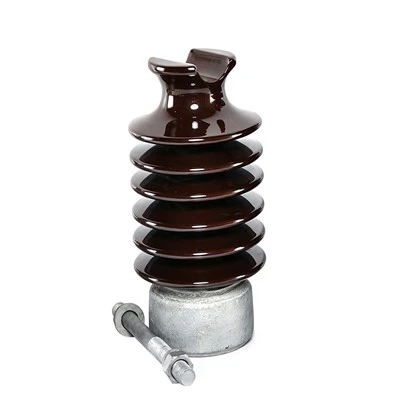
For high-quality, compatible pin insulators for any project, contact our team to discuss your needs.
Suspension Insulator References:
- Occupational Safety and Health Administration (OSHA). Electrical Safety – Arc Flash and Shock Prevention.
- National Electrical Manufacturers Association (NEMA). Standards for Pin-Type Insulators.
- U.S. Department of Energy. Utility Pole Safety and Maintenance Guidelines.
- Institute of Electrical and Electronics Engineers (IEEE). Recommended Practice for Insulator Selection and Application.
Pingxiang Star Electric Porcelain & Insulator Co., Ltd.
We are one of the most professional pin insulator manufacturers and suppliers in China, also support customized service. We warmly welcome you to buy bulk high quality pin insulator in stock here from our factory. If you have any enquiry about pricelist, please feel free to email us.
Address: Wuli Village, Xiangdong Town, Xiangdong District, Pingxiang City, Jiangxi Province, China
E-mail: star_insulator@sina.com
WebSite: https://www.star-insulators.com/
