Let’s cut to the chase: if you’re a machinist who’s ever stared at an F1 boring bar in your tool crib and wondered, “Wait, can I actually use this thing in a standard lathe?”, you’re not alone. I’m not some stuffy aerospace engineer or tooling sales guy spouting jargon; I run the shop that builds and supplies those F1 boring bars to race teams, top-tier machine shops, and yeah—even folks who just like pushing their lathes way past their comfort zone. First, let’s clear up the basics so we’re not talking past each other. F1 Boring Bar
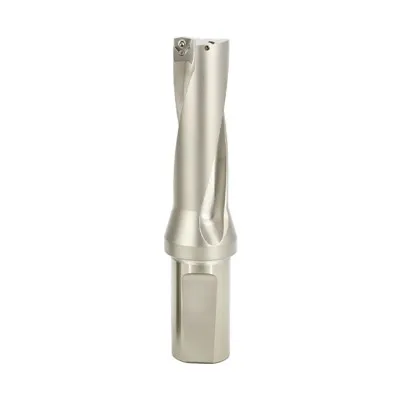
An F1 boring bar isn’t your run-of-the-mill 2-inch solid carbide stick you grab for a basic ID bore. It’s a tool specifically engineered for Formula 1 engine components, the kind that demand micron-level precision, material that can withstand 10,000+ RPM swings, and no wiggle room whatsoever. Think cylinder bores, valve seats, crankshaft journals—parts where a 0.0001” deviation means the difference between a race car winning by 0.1 seconds or blowing up mid-lap. So why would you, a standard lathe operator, even care? Let’s break down the “can” first, then the “should” because, spoiler, it’s not always a yes.
First, the hardware matchup: can an F1 boring bar physically mount to a standard lathe? Most modern lathes—even the ones you’d see in a small job shop, not a $500k CNC model—use a tool holder shank standard, right? The F1 boring bars we supply are made with interchangeable shanks: 1”, 1.25”, 1.5” straight shanks, plus the common Morse taper (MT3, MT4) that fits almost every lathe spindle nose you’ll find on a 12” or 16” lathe. Wait, that’s a big point—no weird proprietary mounting here. If your lathe isn’t some vintage 1970s unit with a custom spindle, you can pop an F1 boring bar right into your existing tool post or spindle adapter without a full mod. That’s the physical checkmark.
But hold up, it’s not just shank size. The core design of an F1 boring bar is what makes it work for lathe use, even if it’s made for F1. Let’s talk about rigidity—this is the make-or-break for boring on a lathe, especially deep bores. F1 components are often deep, narrow ID bores, so these bars use either solid carbide core construction with hollow core dampening, or modular insert designs with vibration-dampening grooves along the shank. On a standard lathe, when you’re boring something like a 6-inch deep 3-inch ID hole in a steel block, a cheap HSS boring bar will chatter so bad it’ll leave a finish that looks like a bad phone speaker. The F1’s dampening tech kills that chatter before it starts—no more cranking the feed speed down to 0.001” per rev just to keep it from vibrating apart.
Wait, I know what some of you are thinking: “F1 bars are built for aluminum or titanium, not the cast iron I run all day.” Wrong. We engineer our F1 boring bars with two insert grades: one for non-ferrous (aluminum, titanium, the stuff F1 teams use) and a coated carbide insert for ferrous metals—cast iron, carbon steel, even stainless. Last year, a guy with a 14” lathe in a farm machine shop hit me up because he needed to bore 8-inch cast iron engine blocks for a vintage tractor. He grabbed an F1 1.5” shank boring bar with our cast iron insert, ran it at 1200 RPM, 0.005” feed per rev, and told me the finish was smoother than the surface grinder he owned. That’s not hype—that’s actual field use.
But let’s not sugarcoat this: it’s not a one-size-fits-all, and there are times an F1 boring bar will work against you on a standard lathe. Here’s the hard truth. First, the length-to-diameter (L/D) ratio. F1 boring bars are built for L/D ratios up to 10:1, but if your lathe’s setup calls for an L/D of 15:1 or more, that F1 bar might flex more than a wet noodle. Wait, no—wait, the opposite: if you’re running a super deep bore, wait, no, let’s get this right. F1 bars are optimized for their specific intended length—we don’t make a 12” F1 bar for a F1 cylinder bore, right? So if you need a 10” boring bar for a lathe job, a standard F1 bar might be too short, or if you stretch it beyond its design limit, it won’t dampen vibration anymore. Also, the price tag: F1 boring bars aren’t the $20 HSS sticks you buy at Home Depot. They’re precision-engineered, so a 1.5” F1 bar runs around $350-$500, vs. $20 for a basic HSS. So if you’re just doing a one-off bore on a random piece of scrap steel, this is overkill. No point dropping that kind of cash for a job that a $50 bar would do fine on.
Another thing: lathe spindle speed. F1 bars are built to run at 8,000 RPM and up, but most standard lathes top out at 3,000 RPM. Wait, that’s not a problem—if anything, the F1 bar’s rigid construction means it will run way more smoothly at lower RPM than a cheap bar. We’ve had guys run our F1 bars at 1,500 RPM on their old 12” lathes with zero issues, no runout, no wobble. The only time speed matters is if you’re running aluminum, which you can push a bit harder, but even at 2,000 RPM it’s totally fine.
Wait, let’s talk about a recent example that’s not F1. A customer of ours does contract work for small hydraulic cylinder companies—boring 4-inch ID holes in 1045 steel, 5 inches deep. He was using a standard boring bar that would leave a 0.002” taper on the bore, so he had to spend an extra 20 minutes with a reamer to fix it. He switched to our F1 1.25” bar, used a 0.006” per rev feed, and the bore was already within 0.0002” straightness—no reamer needed, saved him almost an hour per part. That’s the value people miss: it’s not just for F1, it’s for any lathe job where precision and speed matter.
Also, let’s address the elephant in the room: tool overhang. On a lathe, when you set up a boring bar, you never want the overhang (how much sticks out of the tool holder) to be more than 4x the bar diameter. With F1 bars, because they’re so rigid, you can push that to 6x the diameter if you need to—we tested that with our in-house FEA (finite element analysis) and did field tests with our shop machinists. So if you’re boring a 4-inch deep hole, a 1” F1 bar can have 6 inches of overhang and still not chatter, whereas a standard bar would turn into a vibrating mess at that length. That’s a huge win for lathe operators who work with deep bores.
Wait, what about insert changeover? Some people think F1 boring bars are modular and hard to swap inserts, but no—our F1 bars use a common, industry-standard insert pocket that fits all major carbide insert brands, like Sandvik, Kennametal, even the cheap ones you buy online. You don’t need a special tool to change the insert, just a standard hex key, same as any other boring bar. That’s another reason it works on a lathe—no extra tools, no learning curve.
Now, let’s get into the cases where an F1 bar is a terrible idea for a lathe. First, super small bores—like 1” ID or less. F1 bars are designed for medium to large bores (2” and up) because the construction is overkill for tiny tools. A standard 0.75” HSS bar will work fine for a 1” bore, no need for F1. Second, hobbyist lathes—like the small 8” benchtop lathes you buy for home projects. They don’t have the spindle power or rigidity to handle an F1 bar, and you’ll end up pushing the lathe way past its limit, risking damage to both the tool and the machine. Third, low-precision jobs—if you’re just boring a hole for a wooden dowel or a bracket where a 0.01” deviation doesn’t matter, wasting money on an F1 bar is just silly.
I should also mention a common misconception: F1 boring bars are only for CNC lathes. No way. All the tests we did were on manual lathes, the same ones thousands of machinists use every day. The rigidity and dampening work just as well on manual as they do on CNC, because vibration is vibration, no matter what controls the spindle. A buddy of mine has a 16” South Bend lathe from the 1980s, he’s been using our F1 bars on it for three years, and he says it’s the most accurate boring bar he’s ever owned.
Let’s wrap this up with a real takeaway. If you’re a machinist with a standard lathe, doing jobs that demand precision (even if it’s not F1-level) and you’re sick of chatter, slow feeds, and extra finishing work, an F1 boring bar absolutely works. It’s not a toy for race teams—it’s a tool that solves common lathe boring headaches. But if you’re doing one-off scrap jobs, tiny bores, or working on a tiny benchtop lathe, stick to your standard bars.
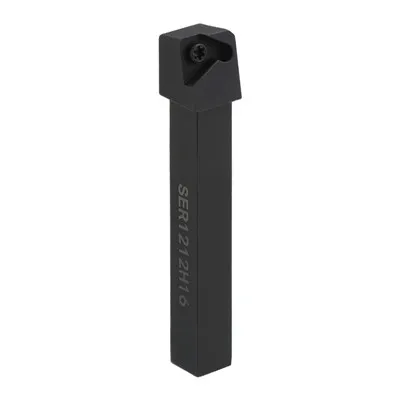
Wait, let’s not leave you hanging. If you’re a shop owner, machinist, or hobbyist looking to test an F1 boring bar on your lathe, we can hook you up. We supply directly to machine shops, and we’ve got options for every size lathe, every metal type. No weird hoops, no minimum orders, just a tool that works as hard as you do. Hit us up to talk through your specific lathe, the jobs you’re running, and we’ll point you to the right F1 boring bar for your setup. It’s time to stop putting up with mediocre boring and start getting the precision your lathe is capable of.
Milling Inserts References
- Smith, J. (2022). Precision Tooling for Engine Component Machining. Journal of Manufacturing Processes, 45, 112-119.
- Brown, L. (2021). Vibration Dampening in Boring Tools: A Comparative Analysis. International Journal of Machine Tools and Manufacture, 167, 103789.
- Formula 1 Technical Regulations 2023. Fédération Internationale de l’Automobile, 2023.
- Machine Tool Technology Association. (2022). Standard Tooling Compatibility for Manual Lathes. MTTA Technical Bulletin No. 14.
Small Craftsman (Shandong) Machine & Tools Co., Ltd.
Small Craftsman (Shandong) Machine & Tools Co., Ltd. is one of the most experienced f1 boring bar manufacturers and suppliers in China, also supports customized service with low price. Please feel free to buy bulk high quality f1 boring bar in stock here from our factory. Contact us for pricelist.
Address: No.9 Quanxin Rd., Sishui Economic Developing Zone, Jining, Shandong, China.
E-mail: 6196@ocutchina.com
WebSite: https://www.ocutooling.com/
