Hey there, let’s cut to the chase: if you’ve ever stood in an electrical supply room or a home workshop staring at a stack of RCCBs and a wall of appliances, you’ve definitely asked this question. As someone who’s been in the RCCB game for over a decade— I’ve fielded this query from electricians, contractors, even home DIYers at 7 a.m. on a Saturday (bless those last-minute electrical fixes) more times than I can count. Let’s break this down without the stuffy jargon, no tech bro fluff, just real, usable info, especially since I’m the RCCB supplier you can hit up when you need answers that actually fit your setup. RCCB
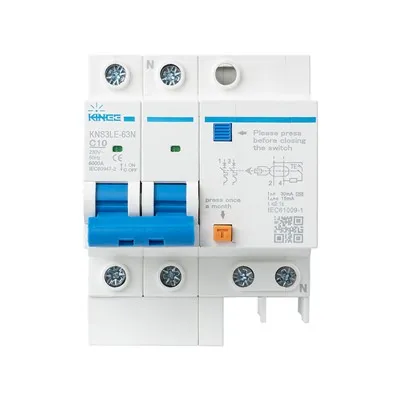
First off, let’s make sure we’re all on the same page about what an RCCB even is, because I’ve seen so many people mix this up with MCBs or breakers. RCCB stands for Residual Current Circuit Breaker, right? The key thing that makes it different is it trips super fast— like, in milliseconds— if it detects even a tiny leak of electricity (that “residual current,” usually 30mA for household stuff, 300mA for heavy industrial) going where it shouldn’t, like into a person or a faulty appliance. It’s the guard dog of electrical setups, not just a breaker that cuts power when there’s an overload.
Now, the million-dollar question: how many appliances can one RCCB support? The short answer? There’s no magic number, but that’s not a cop-out— it’s because it depends on so many real factors, not just some random calculator number. Let’s walk through the actual stuff that matters, the stuff we see day in and day out with our clients.
First, and this is the biggest one: total connected load. Every appliance has a power rating, usually written in Watts or Amps on the little label on the back. For example, a 100W table lamp is 0.83A (since Watts = Volts x Amps, so Amps = Watts / Volts— standard household is 230V, right? Yeah, that’s the number most of the world uses, so that’s our baseline here). A 2000W space heater is 8.7A, a 1500W microwave is 6.5A, a 1000W toaster is 4.3A. An RCCB’s rating is stamped right on it— like 16A, 32A, 63A. That’s the maximum continuous current it can handle before it’ll trip for overload, even if there’s no residual current.
So here’s the math that actually works, no confusion: add up all the running amps of the appliances you want to plug into that RCCB. Don’t guess, go check the labels. If the total is, say, 15A, a 16A RCCB might work— but wait, we always leave headroom, right? Electrical gear hates being pushed to the absolute limit. If you run 15A on a 16A RCCB 24/7, it’ll overheat over time, wear out faster, and that’s a fire risk. So we recommend keeping total load at 80% of the RCCB’s rated current, minimum. That’s a rule we tell every single client, because we’ve seen what happens when people skip that.
Let’s do a real example that’s super common: a home office setup. You’ve got a laptop (150W, 0.65A), a 27-inch monitor (30W, 0.13A), a wireless charger (10W, 0.04A), a desk lamp (20W, 0.09A), a small space heater for cold days (1500W, 6.5A), and a mini fridge in the office (100W, 0.43A). Add all those amps up: 0.65 + 0.13 + 0.04 + 0.09 + 6.5 + 0.43 = ~7.84A. Eighty percent of a 16A RCCB is 12.8A, so that’s no problem— you could add a few more small things, like a router (5W, 0.02A) and a phone charger (10W, 0.04A) easily, no issues. That’s one RCCB supporting like 8 appliances here, easy.
But wait, what about a workshop? Let’s say a guy’s got his garage set up with power tools: a circular saw (15A, wait no— no, 15A is the circuit rating, the saw itself is 1800W, so ~7.8A), a drill (700W, ~3A), a miter saw (12A, ~1.3A), and a work light (50W, ~0.22A). Wait, hold on— power tools often have startup current that’s way higher than their running current, right? That’s called inrush current. Oh, that’s another huge factor I almost forgot. When a motor turns on, it draws 2-3 times its normal running current for a split second. If you plug three motor-driven tools into a single RCCB, all turning on at the same time (even if you turn them on sequentially, if one trips the millisecond another starts), that’s way more current than the RCCB’s rating. So in that workshop example, total running current is ~12.32A, but the inrush from the miter saw at startup is ~3.9A, the circular saw is ~23.4A, wait no— that’s a big one. So if you’ve got a 32A RCCB, its 80% is 25.6A. The workshop total running is ~12.32A, but the peak inrush when all motors turn on at once is way higher— like 30A. Oh, so that’s right at the edge of that 32A RCCB’s limit. So in that case, you can’t add anything else, like a air compressor or a portable heater, or you’re gonna get random trips, which is annoying for a workshop. So in this case, that one RCCB is supporting 4 appliances, max, because of the inrush current.
Next factor: type of appliances and their leakage current. Remember, RCCBs trip on residual current too, not just overload. Every appliance has a tiny bit of inherent leakage— that’s normal, not a fault. Like, a TV has leakage of maybe 0.5mA, a laptop charger is 0.3mA, a fridge is 1mA, a power tool could be 2mA. If you pile a bunch of these on one RCCB, their individual leakages add up. So say you have 10 appliances each with 1mA leakage— that’s 10mA total, which is well below the 30mA threshold for a household RCCB, so no problem. But if you have 20 appliances each with 1.5mA leakage? That’s 30mA exactly, so the RCCB will trip constantly, even if nothing is wrong. That’s a real headache— I get calls every month from people saying their RCCB keeps tripping, and it’s because they crammed too many appliances with small leakages on one circuit. I’ve even seen someone put 25 LED lights (each 0.5mA leakage) on a single RCCB, that’s 12.5mA, fine, wait no— wait 25 x 0.5 is 12.5, that’s nothing, my bad. But if you have 20 power tools each with 2mA leakage, that’s 40mA, which is over 30mA, so trips. That’s a big one people don’t think about— it’s not just the power draw, it’s the tiny leakages adding up.
Another thing: RCCB rating. Not all RCCBs are made the same. There’s AC-type, A-type, B-type. AC-type is for regular household appliances that use AC power, like fridges, TVs, lamps. A-type handles appliances with variable speed drives or DC components, like laptops, power tools, phone chargers. B-type is for super sensitive stuff, like industrial equipment or electric car chargers. If you use an AC-type RCCB on a laptop that has a DC component, it might not trip when it should, or trip randomly even when there’s no fault. So that changes the number of appliances too— if you have 5 laptops, you need an A-type RCCB, and their leakage adds up differently than regular AC appliances. We make all three types here at our shop, so we always ask clients what kind of stuff they’re powering before we recommend a number, because that makes all the difference.
Wait, what about old vs new RCCBs? Oh yeah, that’s another underrated point. A 10-year-old RCCB that’s been through a lot of temperature changes, dust, moisture in a shed— it might not trip at the exact rated current or leakage like a new one. So if you’re using an old RCCB, you can’t push it as hard as a new, properly installed one. We do test all our RCCBs before they leave our warehouse, and we tell everyone to test their RCCBs every year too— that’s part of safety.
Let’s also talk about real-world mistakes we see all the time. One common one: people use a 16A RCCB for a kitchen circuit, then plug in a fridge, microwave, toaster, coffee maker, and a slow cooker. Let’s add those up: fridge (100W, 0.43A), microwave (1500W, 6.5A), toaster (1000W, 4.3A), coffee maker (800W, 3.5A), slow cooker (150W, 0.65A). Total running current: ~15.33A. Wait, that’s over the 16A RCCB’s rating, plus the inrush when the microwave and toaster turn on at the same time. So that RCCB will trip every time you run the microwave and toaster together, which is super annoying when you’re making breakfast. In this case, that one RCCB can only handle, like, 3 of those heavy kitchen appliances, not 5, because of the combined overload and inrush. That’s exactly the kind of call I get: “My RCCB keeps tripping when I use my microwave, what’s wrong?” and it’s just them cramming too many high-watt appliances on a too-small RCCB.
Now, let’s get to the practical, actionable number you can use, right? No vague stuff. For most standard household circuits using 30mA AC-type RCCBs (the ones you have in your kitchen, living room, bedrooms):
- For light loads (lamps, small chargers, TVs, laptops): You can safely have 15-20 small appliances on a single 16A RCCB. The leakage here is tiny, total load is way under 80%, so no issues.
- For mixed loads (light plus medium appliances like fridges, air fryers, washing machines): A 16A RCCB can handle 4-6 appliances, a 32A RCCB can handle 8-10.
- For heavy loads (space heaters, power tools, ovens, dryers): A 32A RCCB can safely handle 2-3 appliances, a 63A RCCB can handle 4-5 max, because of higher inrush and leakage from these bigger motors.
But wait, that’s just general. The only way to get the exact number for your setup is to do two things: first, list every appliance, its wattage, and its leakage (if you can’t find leakage, use 1mA per appliance as a rough estimate for household stuff, 2mA for power tools). Second, add up the running current, add the maximum possible inrush current (usually 2x the running current for household motors, 3x for power tools), and make sure that’s under 80% of your RCCB’s rated current. Also, make sure total leakage is under 30mA for household RCCBs, or whatever the rated leakage is for your RCCB.
And one last critical point: never, ever overload an RCCB just to fit more appliances. I’ve seen people do that to save money, or because they don’t know better, and it leads to two bad things: random, annoying power trips (which makes everyone frustrated) and, worse, fire risks. If your circuit keeps tripping, don’t just tape the RCCB closed or replace it with a higher-rated one— that defeats the whole purpose of the residual current protection. Instead, add another RCCB and split the appliances between them. That’s the safe way, and it’s not that expensive, especially if you’re working with a supplier that has good rates (wink wink, that’s us).
At the end of the day, the “maximum number” isn’t a set number— it’s about matching the RCCB to your actual load, being aware of inrush and leakage, and leaving that 20% headroom. I’ve seen one RCCB support 20 small appliances, and I’ve seen another support only 2 heavy power tools, both totally correct because they fit the setup.

If you’re planning a new circuit, upgrading your old RCCBs, or just need help figuring out exactly how many appliances your setup can handle, hit me up. I don’t do pushy sales stuff— I’ll just give you the real, no-BS advice, and help you get the right RCCB without all the nonsense. Don’t guess when it comes to electricity— it’s better to be safe than sorry, and that’s what we’re here for.
Load Break Switch References
- International Electrotechnical Commission (IEC) 61008: Residual current operated circuit-breakers for household and similar uses (RCCBs)
- National Electrical Code (NEC) Article 210: Branch Circuits and Feeders
- Electrical Safety Foundation International (ESFI): RCCB Usage and Safety Guidelines
Wenzhou Kinee Electrical Co., Ltd.
We are one of the most professional rccb manufacturers and suppliers in China, featured by quality products and good price. Please rest assured to buy advanced rccb made in China here from our factory. We also accept customized orders.
Address: Unit 1, Building 31, Wenzhou Wenbo Science and Technology Industrial Park, No. 706 Yanyun Road, Lingkun Street, Oujiangkou Industrial Cluster Area, Wenzhou, Zhejiang Province
E-mail: sandyma@kinee.net
WebSite: https://www.kinee.net/
