Hey there, let’s cut to the chase: if you’ve ever stared at a beat-up wooden cabinet in a workshop, warehouse, or even a home workshop, wondering if that industrial cabinet lock you just restocked from your supplier will work on it—you’re not alone. I’ve been selling industrial cabinet locks for years, and this is the question I get at least three times a week. Most folks assume industrial hardware is only for steel or heavy-duty metal cabinets, but nah, that’s a myth I’m here to bust today. Let’s get real about whether those big, tough locks can actually play nice with wooden cabinets, how to make it work (the right way), and when you might wanna pivot to something else. Industrial Cabinet Lock
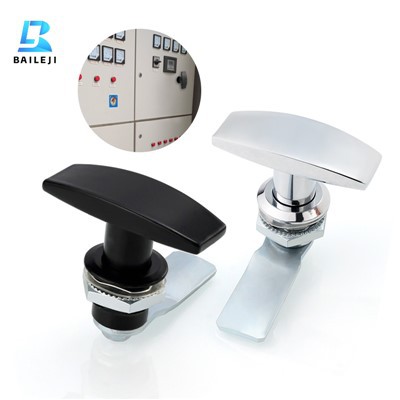
First off, let’s ground this in what we’re actually dealing with. Industrial cabinet locks aren’t your average little keyed locks for a bathroom linen cabinet. We’re talking heavy-duty stuff—think cam locks, paddle locks, hasp locks, those keyless combination knob locks that can take a beating. Our locks are built for two things: security (keeping tools, chemicals, sensitive parts out of kids’ or unauthorized hands) and durability (withstanding dust, moisture, rough handling, maybe even a little grease from a factory floor). Wooden cabinets, on the other hand? They vary wildly. You’ve got solid pine workshop cabinets that are thick and sturdy, particleboard that’s cheap and crumbly, oak that’s dense and tough, or even MDF that swells like a sponge if it gets wet. That variability is why this isn’t a yes/no question—it’s a “depends on a few things” question, and I’ve seen it go both ways.
Let’s start with the times it works like a charm. I had a customer last month—small woodworking shop in Ohio, owner named Jake. He had a bunch of solid maple cabinets he built himself for storing router bits, table saw blades, and that expensive wood finish that’s toxic. He bought a set of our heavy-duty cam locks, and they fit perfect. Why? Solid wood is dense enough to hold the lock’s mounting screws without splitting or stripping. Industrial cam locks work by slipping into a pre-drilled hole and tightening a nut on the inside—wait, no, actually most surface-mount cam locks need a flat, solid surface to mount to. Solid wood has that. Jake drilled a 1-inch hole, slid the lock in, tightened the internal nut, and it’s been holding strong for six months. No wobble, no one’s picking it, and it looks way more secure than the flimsy plastic locks he had before. That’s the win case, right there.
Another win scenario: if your wooden cabinet’s door is braced with metal trim. I’ve seen warehouses repurpose old wooden filing cabinets (the old, thick ones, not the particleboard ones) and add metal edge trim to the doors. Adding a hasp lock—our heavy-duty steel hasp, not the flimsy plastic ones—works great here. The metal trim keeps the hasp from pulling through the wood when someone’s prying at it, which is a common problem. I sold a batch of these to a logistics company last year that was storing sensitive shipping manifests in old wooden cabinets, and they said it’s been way more secure than their old combination locks that kept failing. They also use paddle locks on those, which are super easy to snap shut and have a big lever you can grip with greasy hands—perfect for a warehouse setting where gloves are standard.
But here’s where things go wrong, and I can’t sugarcoat this: a lot of wooden cabinets just aren’t built for industrial locks. The big culprit is particleboard or MDF. I had a customer last quarter—small office that was turning their storage closet into a supply room. They had cheap particleboard cabinets, came to me wanting to put our heavy-duty combination locks on the doors. I tried to warn them, but they insisted. A month later, they were back—half the locks had pulled right through the particleboard, because the particleboard couldn’t hold the mounting torque. Those industrial locks are built to take force; particleboard? It’s basically compressed sawdust. It doesn’t have the tensile strength to handle the pressure when someone jiggles the lock or even just slams the door a little too hard. Same issue with thin solid wood, like 1/2-inch pine doors that aren’t braced. Those will split right along the screw holes if you’re not careful, which is a pain to fix and defeats the whole purpose of a lock.
Wait, there’s also moisture. If your wooden cabinet is in a damp spot—like a basement workshop, or a outdoor shed—wood swells and shrinks, right? That movement can mess with the lock’s fit. We sell a lot of rust-resistant steel locks for outdoor use, but if the wood is swelling so much that the door won’t close all the way, even the toughest lock isn’t gonna work. I learned this the hard way early on—sold a set of keyless combination locks to a guy with outdoor wooden tool cabinets, and by fall, the wood had swelled so bad the lock wouldn’t turn. He ended up routing a little bit of wood out from the door edge, but it was a headache. So location matters a lot too.
Now, let’s get to the good stuff—how to make this work, if you’ve got a wooden cabinet and want to use an industrial lock from our catalog. I’ve compiled a list of tricks I share with every customer who asks, and they’ve never steered me wrong. First, check the wood type and thickness. Rule of thumb: if it’s solid wood at least 3/4-inch thick, or wood with a metal reinforcing strip on the door edge or frame? You’re golden. If it’s thinner than that, or particleboard/MDF? You might need a little modification.
Second, pick the right lock. Don’t grab a random heavy-duty lock—match it to your cabinet. For solid wood doors, surface-mount cam locks or paddle locks work best, because they distribute force evenly. If you’ve got a hasp, make sure it’s steel (not brass, which is softer) and pair it with a 1/4-inch steel hasp, and make sure you screw it into a stud or a metal brace, not just the wood. For MDF or thin wood? I recommend adding a metal backing plate. That’s a thin steel plate you screw the lock through, so the mounting surface isn’t just the flimsy wood. It distributes the torque, so the lock doesn’t pull through. I sell these as add-ons, and they’re a game-changer.
Third, installation is key. Don’t skip pre-drilling the pilot holes—even for solid wood, if you drill a big hole without a pilot, you’ll split the wood. For cam locks, measure the hole size exactly (most take a 1-inch hole, but check the lock specs) and drill straight, not at an angle. If you’re putting a hasp on, mark the holes with a pencil, use a drill bit the same size as your screws, and go slow. No rushing. I always tell customers: take 10 minutes to install it right, instead of 5 minutes and then having to fix a broken door.
Wait, let’s talk about security levels too, because that’s why industrial locks are different. Regular home locks are for keeping honest people out, but industrial locks are for keeping unauthorized people out, or preventing theft of valuable items. So if your wooden cabinet is storing something super important—like chemicals, expensive tools, sensitive documents—an industrial lock is way better than a cheap one. But only if it’s mounted right. I had a customer who stored flammable cleaning supplies in a wooden cabinet, and he used a regular lock that a kid could pick. Switched to our heavy-duty combination cam lock, and he said it’s been a huge peace of mind. The lock’s made of steel, so no one’s cutting through it, and the wood door is thick enough to hold it.
Now, when should you just skip the industrial lock and go for something else? Let’s be real. If your cabinet is particleboard thinner than 1/2-inch, if it’s in a super damp area with no way to reinforce it, or if you’re just storing old socks and not valuable stuff? Industrial locks are overkill. They’re more expensive, and you don’t need that level of security. But if you’ve got thick solid wood, a metal brace, and need to keep things secure? They work perfectly.
As a supplier, I’m not here to sell you something that’s gonna fall apart a month later. That’s why I give honest answers—if your cabinet isn’t a good fit, I’ll tell you, and I’ll help you find something that is. I’ve had customers come to me worried they wasted money on a lock that doesn’t fit, and I work with them to adjust. Like that particleboard office customer I mentioned earlier? I hooked them up with a set of our smaller, lighter-duty cam locks with backing plates, and they’ve been happy ever since. It’s about making the right fit, not just pushing a product.
Here’s a quick pro tip I learned from a carpenter customer: if you’re unsure about your wood’s strength, do a quick test. Grab the spot where you wanna mount the lock, push as hard as you can. If the wood doesn’t give, doesn’t bend, and doesn’t splinter? It’s solid enough. If it gives way or splinters? Add a backing plate or use a lighter-duty lock. That test takes 10 seconds and saves a lot of headache.
Now, let’s wrap this up, because I know you’re probably wondering what the bottom line is. Can industrial cabinet locks be used on wooden cabinets? Yes—when the conditions are right. Thick solid wood or wood with metal reinforcement, proper installation, and matching the right lock to your use case. When it’s wrong? Thin particleboard or MDF, no reinforcement, heavy prying or harsh conditions.
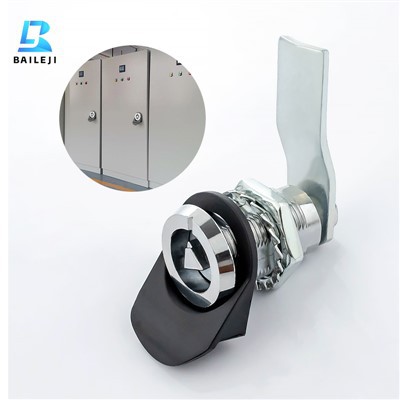
If you’re sitting there looking at a wooden cabinet, staring at an industrial lock that’d be perfect for your needs, and you’re not sure if it’ll work—hit us up. We don’t do pushy sales talk, we just give real advice and get you the right product for your project. Whether you need one lock for a home workshop or 100 locks for a warehouse, we can help you figure it out. No awkward forms, no hidden fees, just straight talk from people who know industrial hardware and wooden cabinets.
Cabinet Door Lock References:
- National Wood Flooring Association. (2021). Wood strength characteristics for industrial and residential applications.
- American Society of Mechanical Engineers. (2019). Standard for lock mounting and compatibility with wood substrates.
- Industrial Lock and Hardware Association. (2022). Guide to selecting locks for wooden storage units and cabinets.
Suzhou Baileji Intelligent Lock Industry Co., Ltd.
As one of the most professional industrial cabinet lock enterprises in China, we’re featured by quality products and good price. Please rest assured to buy discount industrial cabinet lock in stock here and get pricelist from our factory. Also, customized service is available.
Address: 3rd Floor, Building 9, Shengteng Industrial Park, No. 8 Ruyuan Road suzhou, jiangsu, China
E-mail: vip@bailejilocks.com
WebSite: https://www.bailejilock.com/
