Hey there! I’m a supplier of multi – scenario delivery robots, and I’m super stoked to spill the beans on how these nifty machines work. Multi-scenario Delivery Robot
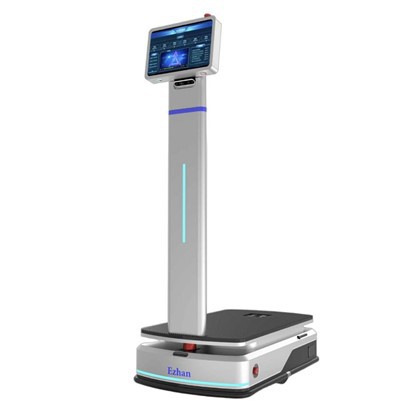
The Basics of a Multi – Scenario Delivery Robot
First off, let’s talk about what a multi – scenario delivery robot is. It’s not just your average robot that can roll around and carry stuff. These robots are designed to operate in a bunch of different settings, like restaurants, hospitals, office buildings, and even outdoor sidewalks. They’re built to handle various types of deliveries, from food and packages to medical supplies.
The Hardware
At the heart of these robots is a solid piece of hardware. There’s a chassis that serves as the base. It’s usually made of strong and lightweight materials like aluminum or high – grade plastics. This allows the robot to move around easily while still being durable enough to withstand the wear and tear of daily use.
On top of the chassis, there are compartments. These compartments are where the items to be delivered are stored. They come in different sizes and configurations depending on the type of delivery the robot is meant to do. For example, in a food delivery scenario, the compartments might be insulated to keep the food hot or cold.
The robot is equipped with a set of wheels. Most multi – scenario delivery robots have four wheels, but some might have more for better stability. These wheels are powered by electric motors. The motors are controlled by the robot’s onboard computer, which decides how fast the wheels should spin and in which direction.
There are also a bunch of sensors all over the robot. These sensors are like the robot’s eyes and ears. They help the robot "see" its surroundings and avoid obstacles. Some common sensors include lidar sensors, which use laser light to create a 3D map of the environment. There are also ultrasonic sensors that use sound waves to detect objects nearby. And don’t forget about the cameras. Cameras are used for visual recognition, like reading signs or identifying people.
The Software
The software is what really makes the robot smart. It’s like the brain of the operation. There’s an operating system that manages all the hardware components. It makes sure the motors are working properly, the sensors are sending data, and the compartments are functioning as they should.
Navigation software is a crucial part. This software uses the data from the sensors to plan a route for the robot. It takes into account things like the location of the delivery destination, any obstacles in the way, and the layout of the environment. For example, if the robot is in a hospital, the navigation software will know the layout of the hallways, elevators, and rooms.
There’s also software for communication. The robot needs to be able to talk to other devices, like the delivery management system in a restaurant or the hospital’s internal network. This communication software allows the robot to receive delivery orders, send status updates, and interact with other systems.
How It Works in Different Scenarios
Restaurant Delivery
Let’s start with a restaurant. When a customer places an order, the restaurant staff puts the food in the robot’s insulated compartments. The delivery management system in the restaurant sends the order details, including the customer’s address, to the robot.
The robot’s navigation software then plans a route. If the restaurant is in a busy city, the robot will use the lidar and camera sensors to navigate through the crowded sidewalks. It’ll avoid pedestrians, bicycles, and other obstacles. Once it reaches the customer’s location, the robot uses its communication software to notify the customer. The customer can then use a code or an app to open the compartment and get their food.
Hospital Delivery
In a hospital, the robot has a different set of tasks. It might be used to deliver medical supplies, lab samples, or even medications. The robot is connected to the hospital’s internal network. When a doctor or nurse requests a delivery, the order is sent to the robot.
The navigation software takes into account the hospital’s layout, including restricted areas. The robot uses its sensors to move through the hallways, wait for elevators, and find the correct room. It can even interact with the hospital’s door systems to enter and exit rooms. Once it delivers the item, it sends a confirmation back to the system.
Office Building Delivery
For office buildings, the robot is often used to deliver packages and mail. It can operate in the lobby, elevator, and corridors. The delivery system in the building sends the delivery details to the robot. The robot navigates through the building, using its sensors to avoid people and furniture. When it reaches the recipient’s office, it notifies the person. The recipient can then collect their package.
The Advantages of Using Multi – Scenario Delivery Robots
There are several reasons why businesses are starting to use these robots. First of all, they’re super efficient. They can work 24/7 without getting tired. This means that deliveries can be made at any time of the day or night.
They also improve safety. In a hospital, for example, robots can reduce the risk of cross – contamination by delivering items without human contact. In a busy city, they can navigate through traffic and crowded areas more safely than a human delivery person.
Cost – effectiveness is another big advantage. Once you purchase the robot, the ongoing costs are relatively low. You don’t have to pay for things like salaries, benefits, and insurance for human delivery workers.
Challenges and Solutions
Of course, there are some challenges when it comes to multi – scenario delivery robots. One of the biggest challenges is dealing with unexpected situations. For example, if there’s a sudden construction site on the robot’s planned route, it needs to be able to adapt.
To solve this, the robot’s software is designed to be flexible. It can quickly re – plan a route based on the new information from the sensors. The robot can also communicate with the delivery management system to get updated instructions.
Another challenge is security. The robot needs to protect the items it’s delivering and the data it’s carrying. To address this, the compartments are often locked with secure mechanisms. The communication between the robot and other systems is encrypted to prevent unauthorized access.
Why You Should Consider Buying Our Multi – Scenario Delivery Robots
If you’re in the business of food delivery, healthcare, or office management, our multi – scenario delivery robots can be a game – changer for you. They’re reliable, efficient, and easy to integrate into your existing systems.
Our robots are built with the latest technology. The sensors are top – notch, and the software is constantly updated to improve performance. We offer a range of models to suit different needs and budgets.

Whether you’re a small restaurant looking to improve your delivery service or a large hospital in need of a reliable way to transport medical supplies, our robots can help. They’ll save you time, money, and hassle.
Customized AMR/AGV Robot If you’re interested in learning more about our multi – scenario delivery robots or want to discuss a potential purchase, don’t hesitate to reach out. We’re here to answer all your questions and help you find the perfect solution for your business.
References
- "Robotics in Logistics and Delivery", Journal of Automated Transportation Systems
- "Multi – Scenario Robot Navigation: Challenges and Solutions", International Journal of Robotics Research
- "The Future of Delivery: Multi – Scenario Robots", Transportation Technology Review
Shenzhen Ezhan Technology Co., Ltd.
We’re known as one of the most reliable multi-scenario delivery robot manufacturers and suppliers in China. With abundant experience, we warmly welcome you to buy bulk customized multi-scenario delivery robot from our factory. If you have any enquiry about cooperation, please feel free to email us.
Address: Room 1808, 1809, 1810, Building 2, Aipark, Baolong 4th Road, Longgang District, Shenzhen City
E-mail: sales01@ezhankeji.com
WebSite: https://www.ezhanrobot.com/
